


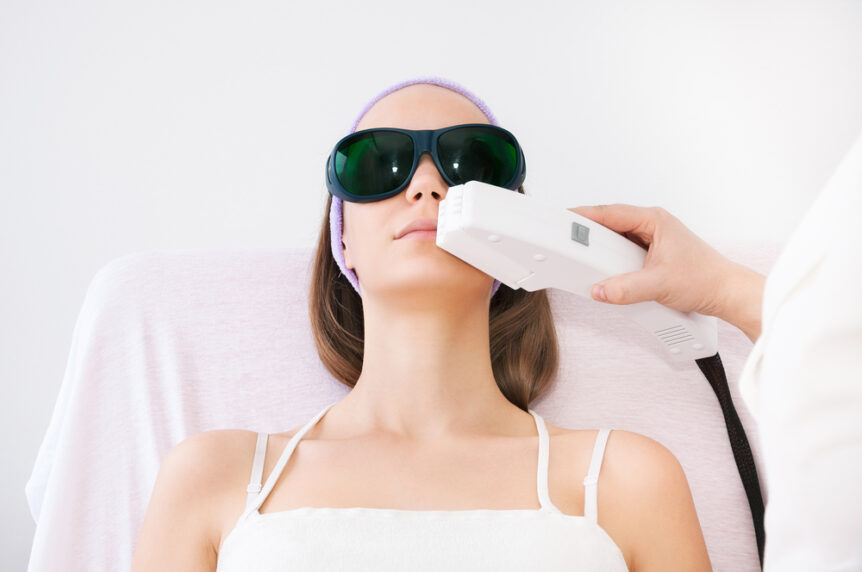
Although laser hair removal is a fairly new form of epilation, it is becoming more readily available throughout Great Britain.
Laser hair removal is selective photothermolysis, which is the precise targeting of a structure or tissue using a specific wavelength of light to absorb into the targeted area in this case the , producing sufficient heat to damage the targeted area, whilst allowing the surrounding area, the skin to remain relatively untouched. This is possible because light is absorbed by dark objects, so laser energy can be absorbed by dark material in the skin. Hair removal lasers selectively targets the pigment melanin.
Formed by cells called melanocytes, melanin is the substance or pigment that gives the skin and hair its natural colour. In humans those with darker skin have a higher concentration of melanin, by contrast those people with less melanin have lighter or a more fair skin colour. In hair there are two types of melanin eumelanin, gives hair black or brown colour and pheomelanin which gives hair a blonde or red colour. Because of the selective absorption of the laser light, only black or brown hair can be effectively removed, the ideal combination for this procedure is fair skin and dark hair.
What is the procedure with laser hair removal?
 The area to be treated is shaved and cleaned, an anaesthetic cream is applied, and then the laser is then set to work. Although the procedure can be uncomfortable, it is not usually painful, unlike many other more common hair removal procedures where experiencing some pain can be expected. A session can last anywhere between a few minutes to maybe an hour or more, this is dependent on the size of the area being treated. There are normally very few after effects associated with this treatment, and any redness or swelling that may occur at the treated area generally disappears in a short time, with post people being able to resume normal activity pretty much straight after the treatment has been completed. However, it is advisable to avoid sun exposure for a few weeks after the treatment and to use a suitable sunscreen where direct exposure cannot be avoided.
Whilst laser hair removal is generally a safe procedure when carried out by an experienced person, possible complications may include a darkening or lightening of surrounding skin or burning/blistering of the surrounding skin. However, this is rare, and most will not experience any such side effects. Most treatments require four to six sessions for permanent hair removal in an area, with the procedure normally being repeated at monthly intervals.